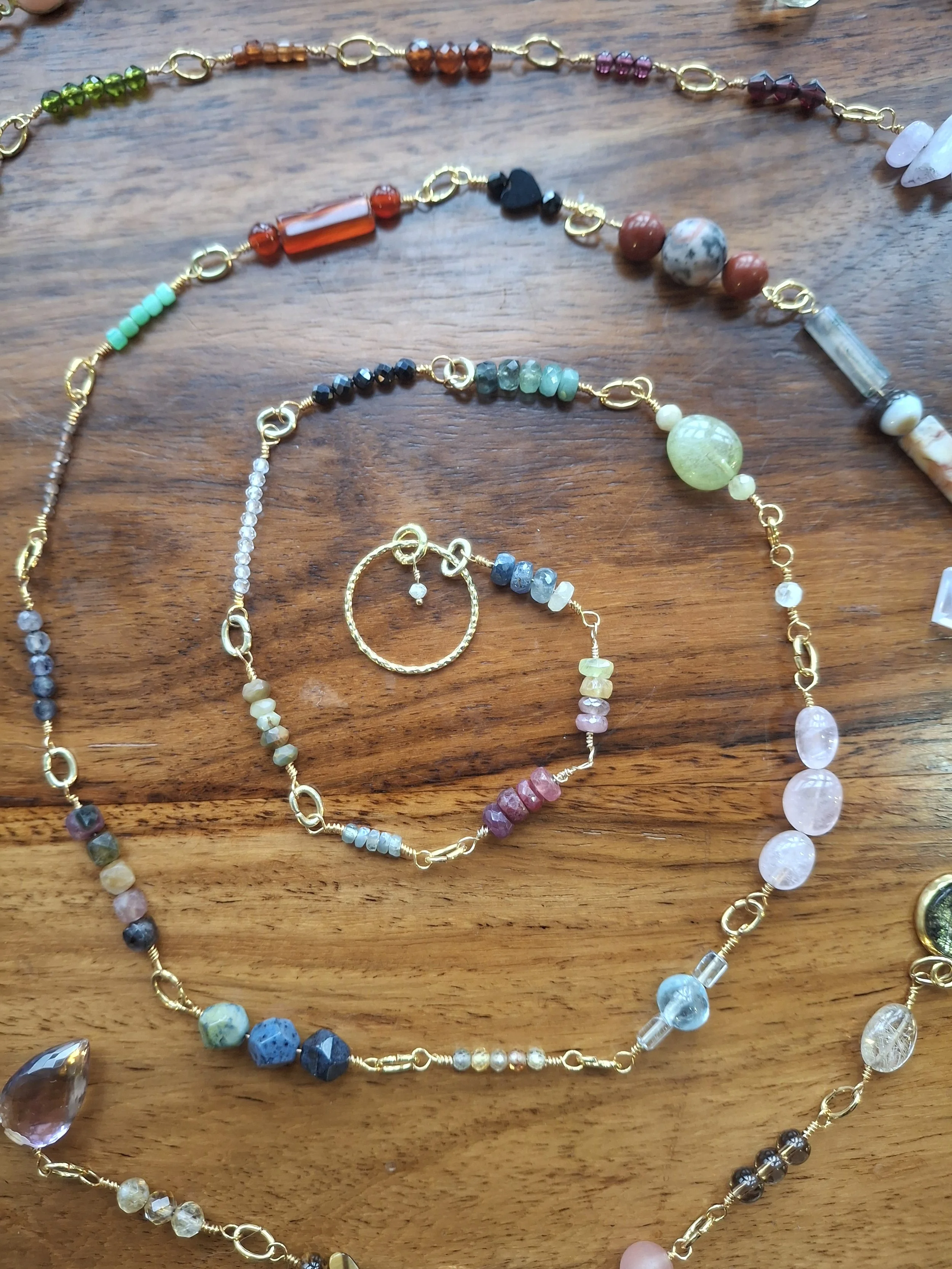
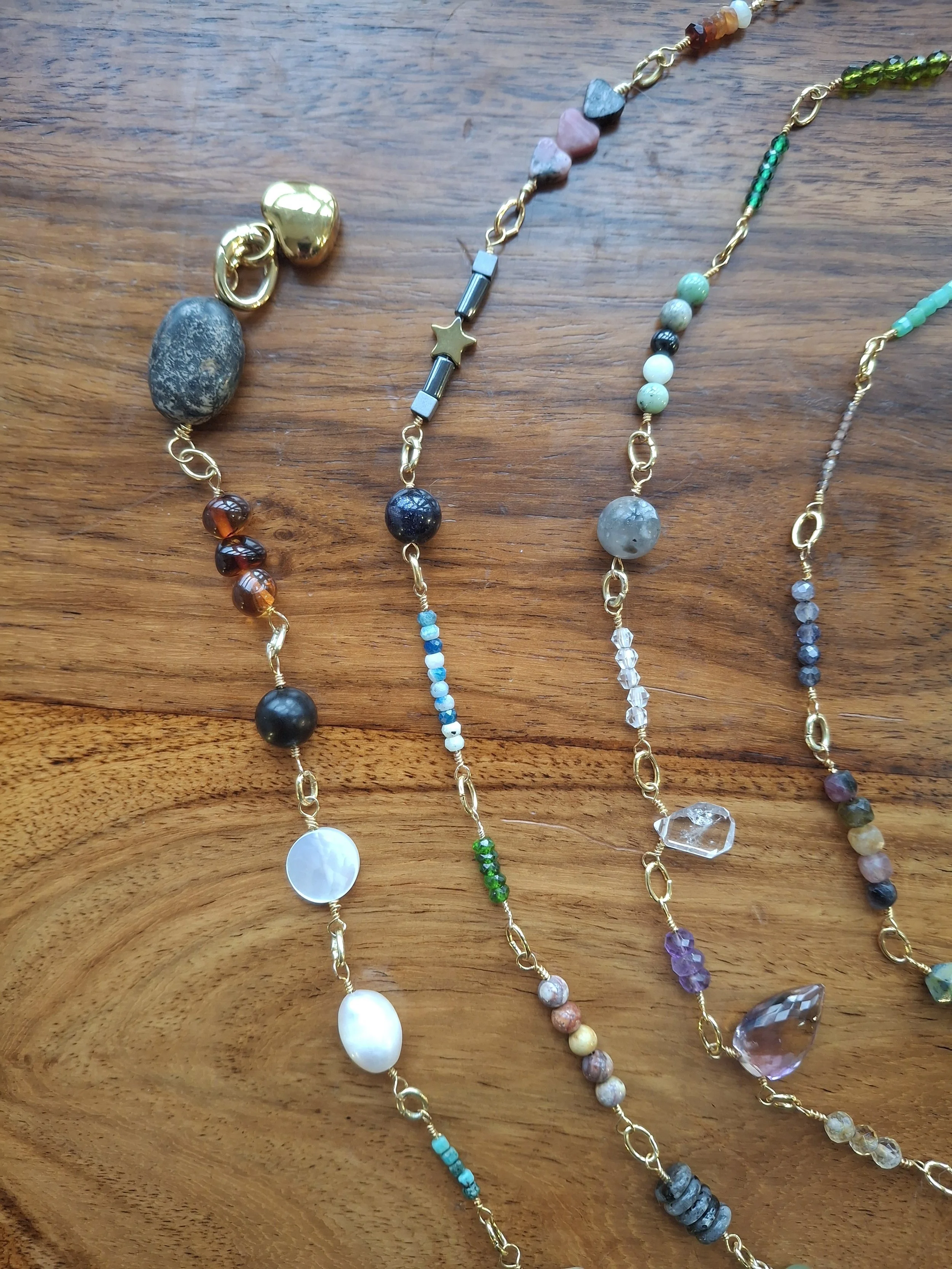
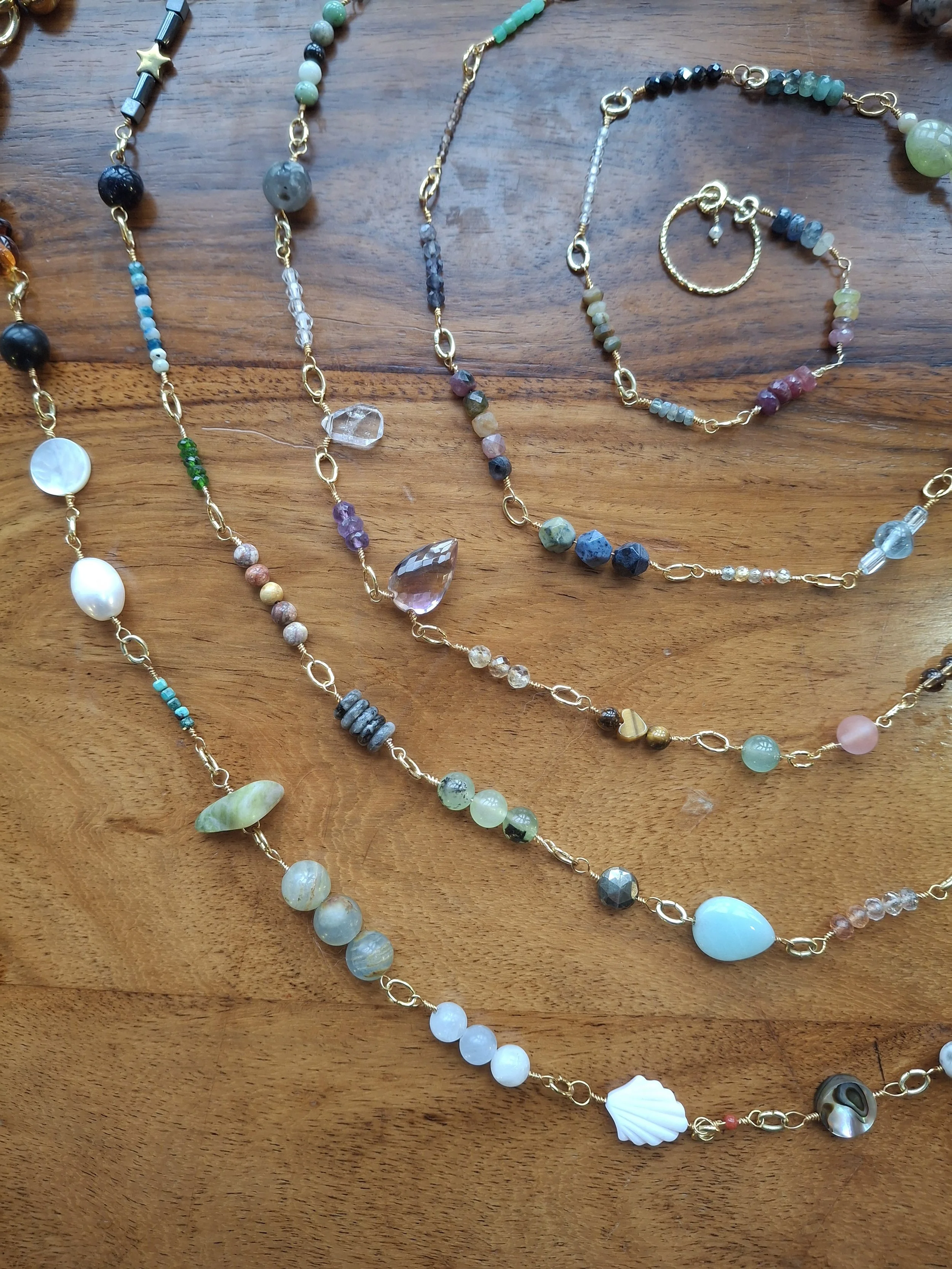
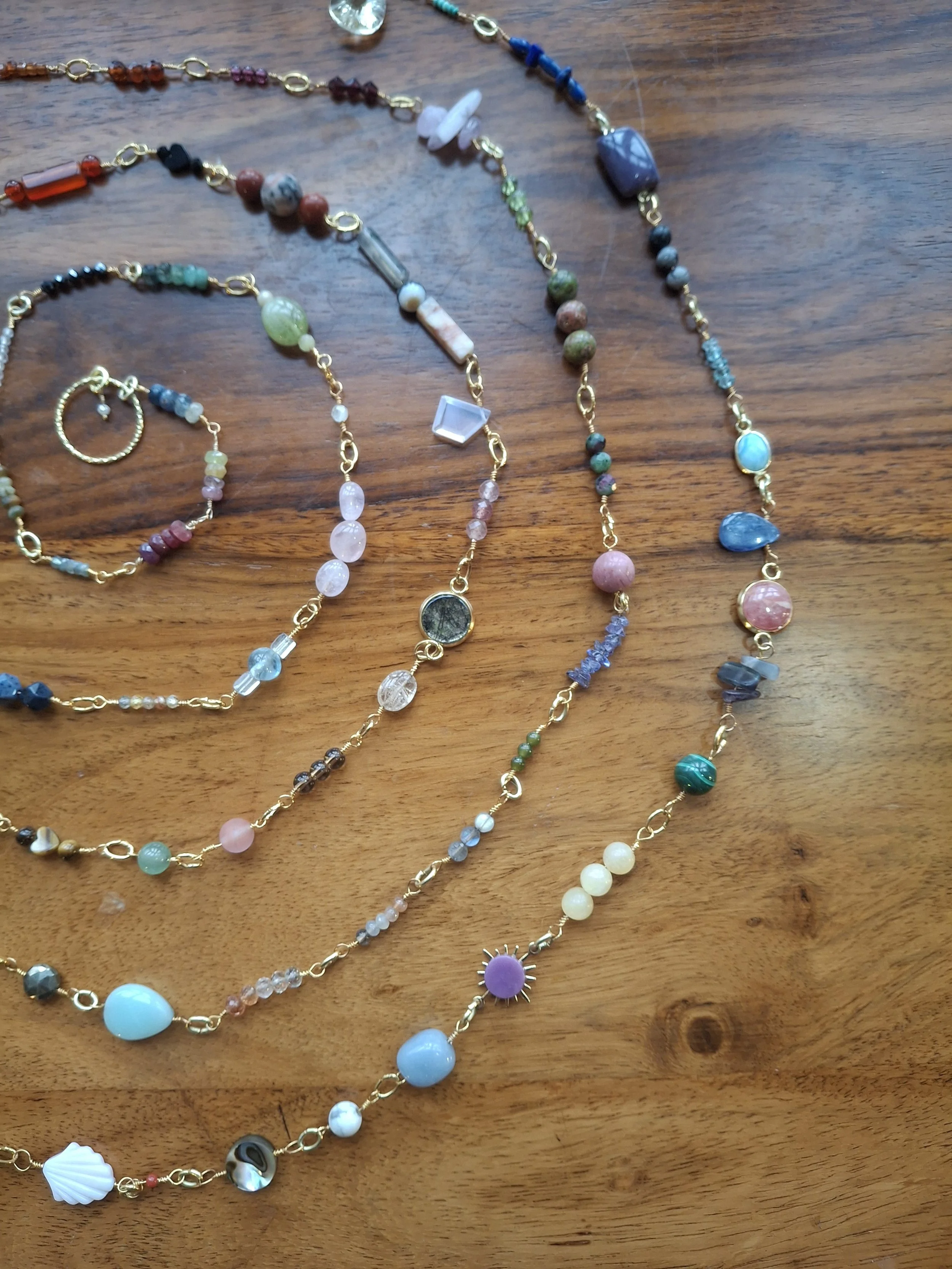
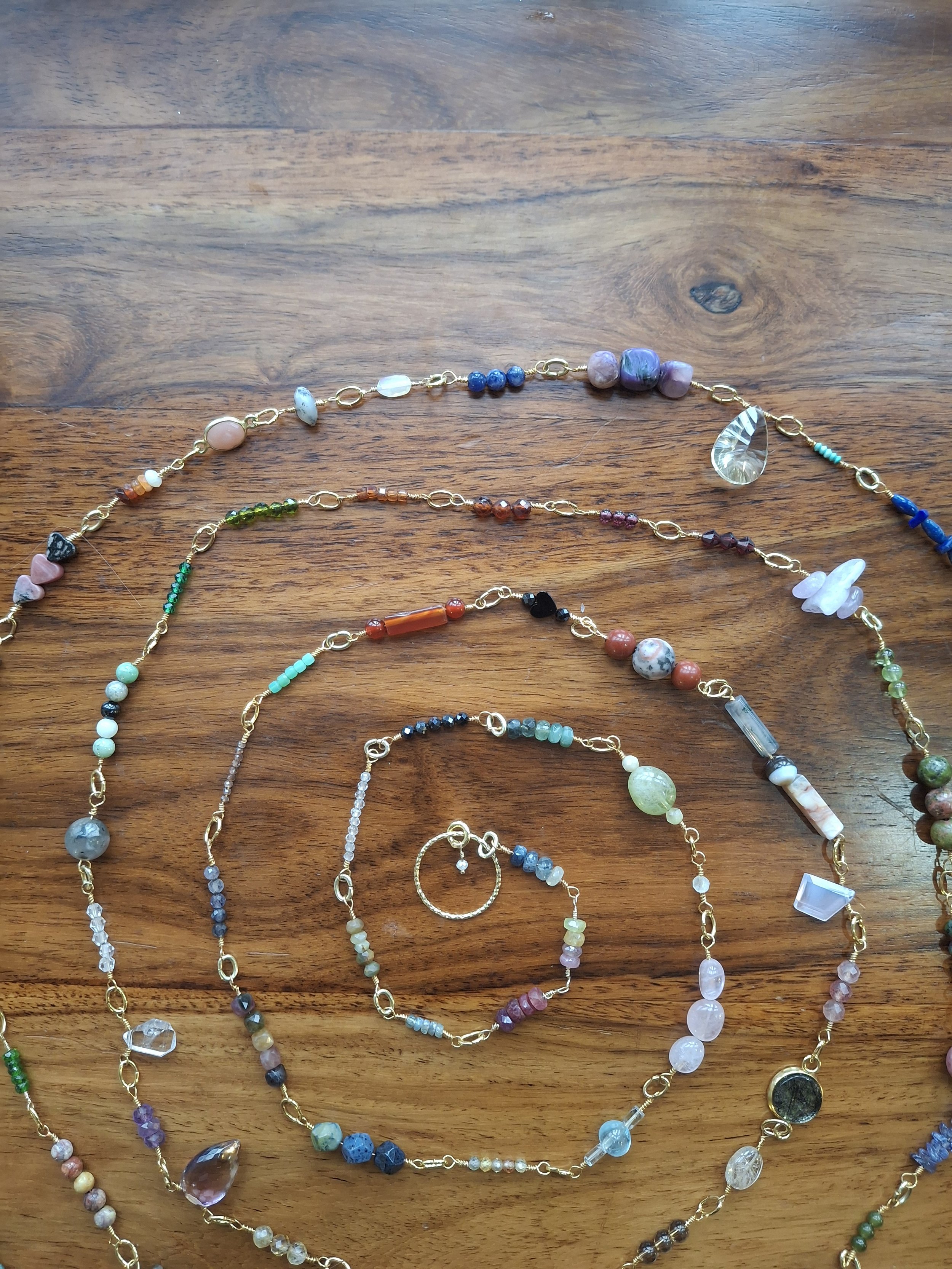
Mohs’ necklace
I've long been a fan of the Mohs scale of hardness, mostly because I just like how simple it is - 'this rock scratch that rock but that rock scratch this rock' - and because a love for geology is in my blood and I feel it’s a beautiful way to honour the memory of my grandfather. I also deeply appreciate the field kits, which have that classic nineteenth century natural sciences aesthetic.
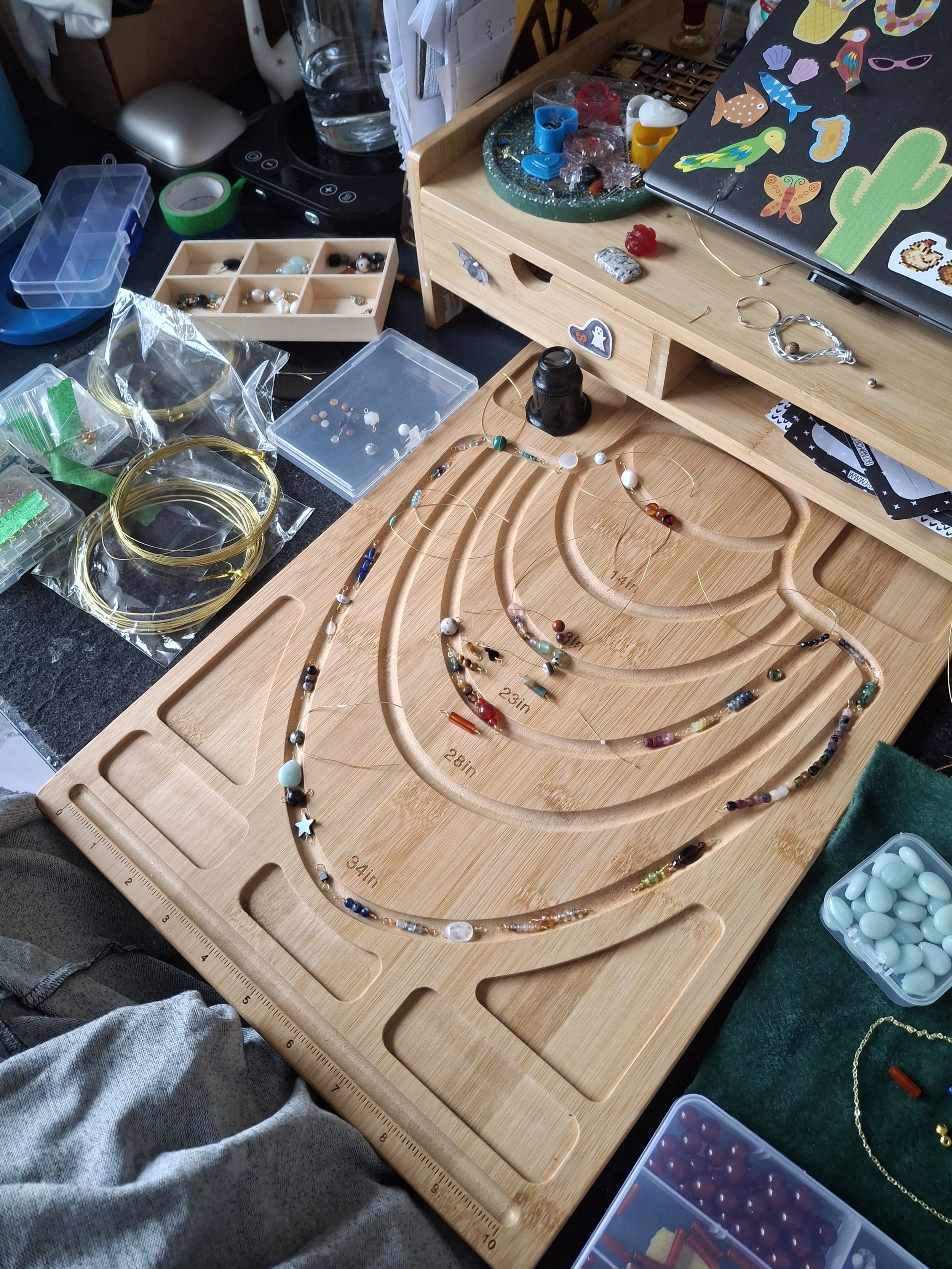
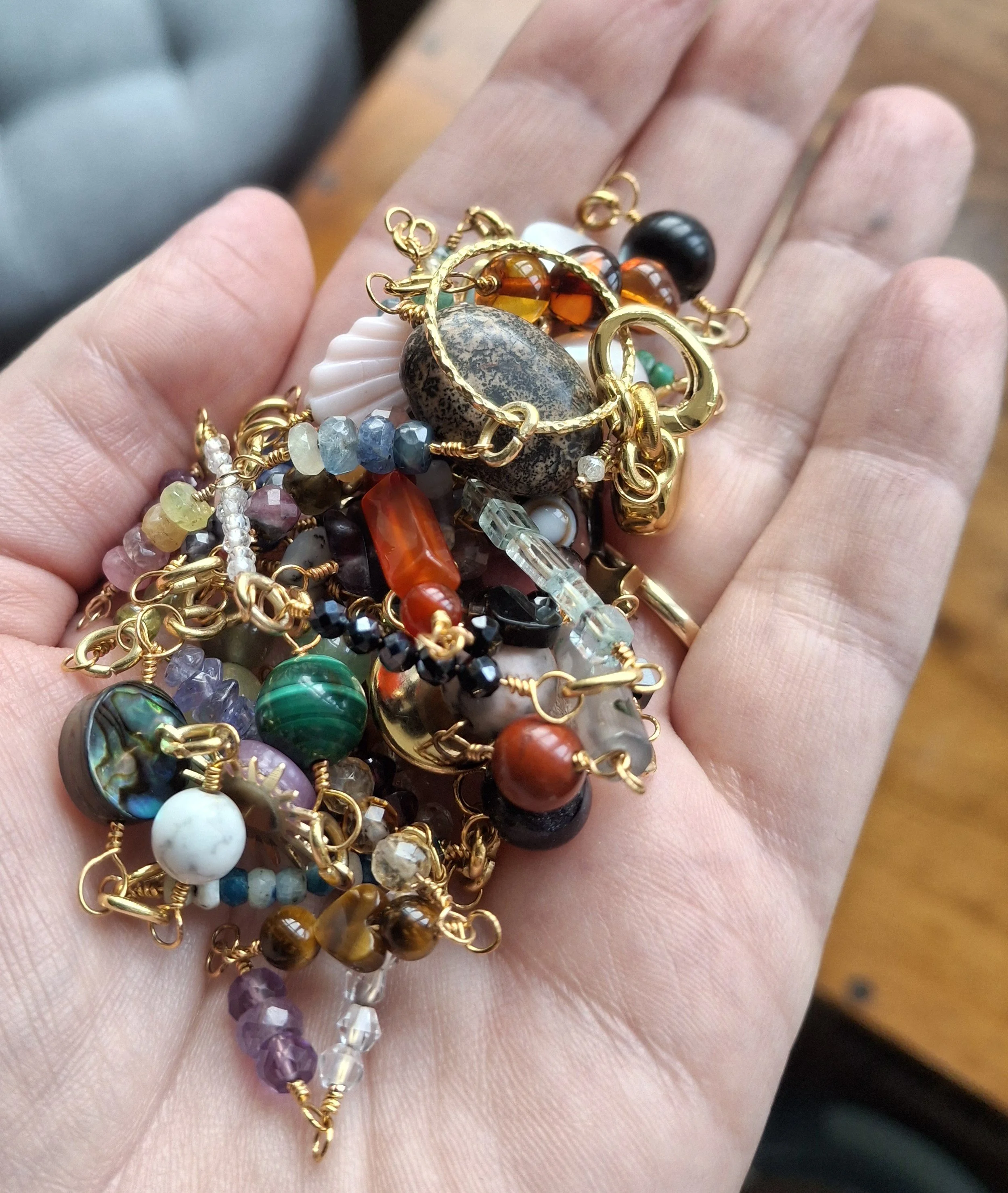
I've had a lot of time on my hands and been in need of a little distraction lately, so I decided to use the scale as inspiration for a jewellery project, allowing me an excellent chance to sort out and use some of my stash, but, more importantly, gather more beads for my hoard. *Smaug noises*
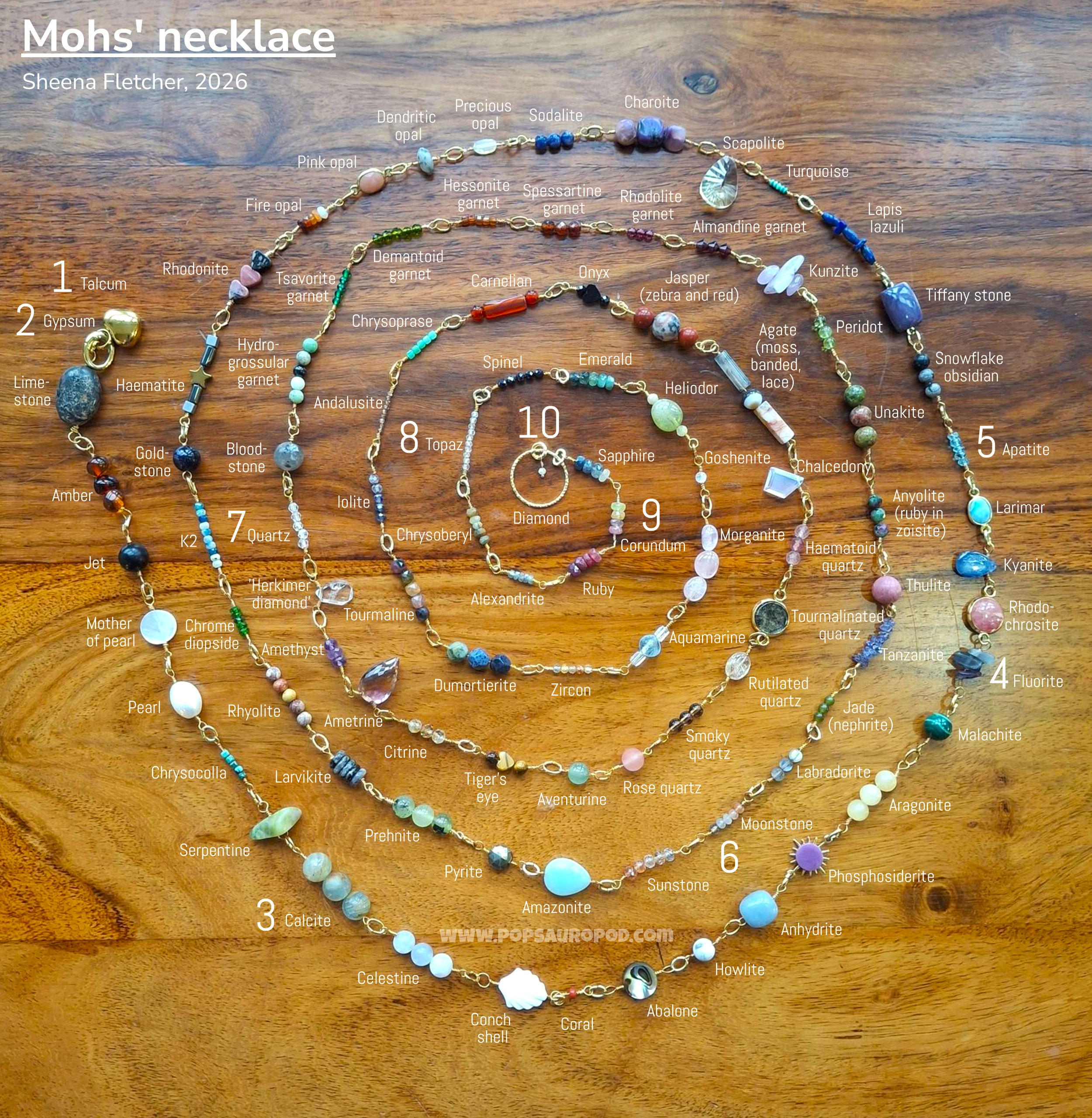
Click to embiggen
I started a spreadsheet to help me organise and sort the beads already in my collection, arranging them numerically based on the Mohs scale number for the gem, plus collecting interesting facts about them too. It’s been really absorbing to learn about what actually counts as a 'gem' or ‘gemstone’, the differences between minerals, rocks and mineraloids, the many mineral species, groups and series, as well as the organic gems with biogenic origins like pearl, shell, jet and amber.
It's also fascinating how different sociological and historical, as well as geological, factors influence what we consider to be precious and rare, and what is merely a shiny rock.
In compiling all this info, I realised just how many of the world's wonderful shiny rocks I had not yet had a chance to get my hands and eyes on and have spent months happily hunting down and buying beads and cabochons online. I like to imagine that, while I am sitting in my Glasgow flat, I am really on a virtual expedition across the globe to acquire treasure.
Thankfully, a lot of gem beads are relatively inexpensive, and even for the most precious gems, beads tend to be made of low-grade stones so it isn’t as expensive an undertaking as you might first think (and certainly cheaper than Warhammer) so as long as nobody looks too closely at my credit card statement, it’s all good…
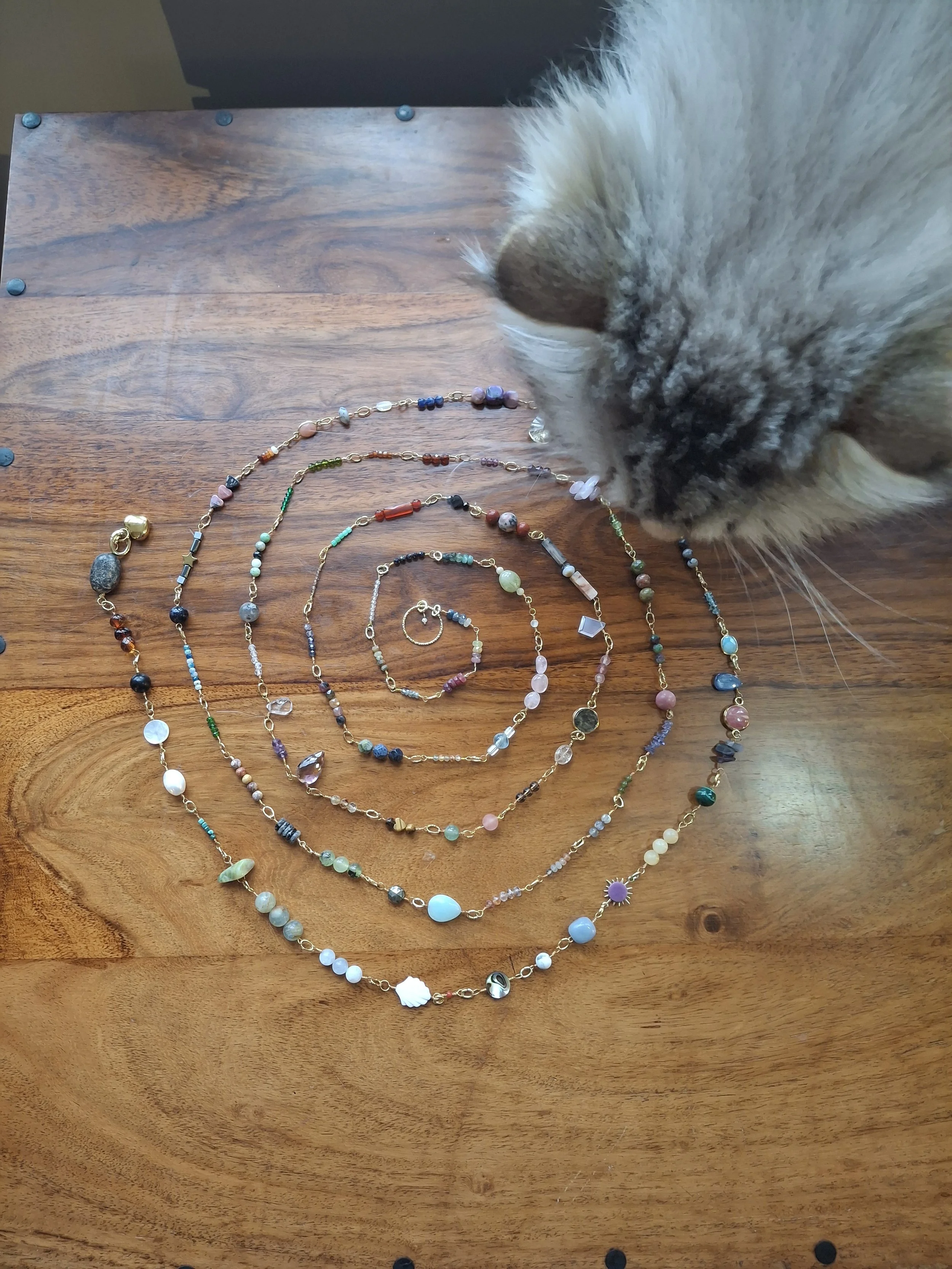
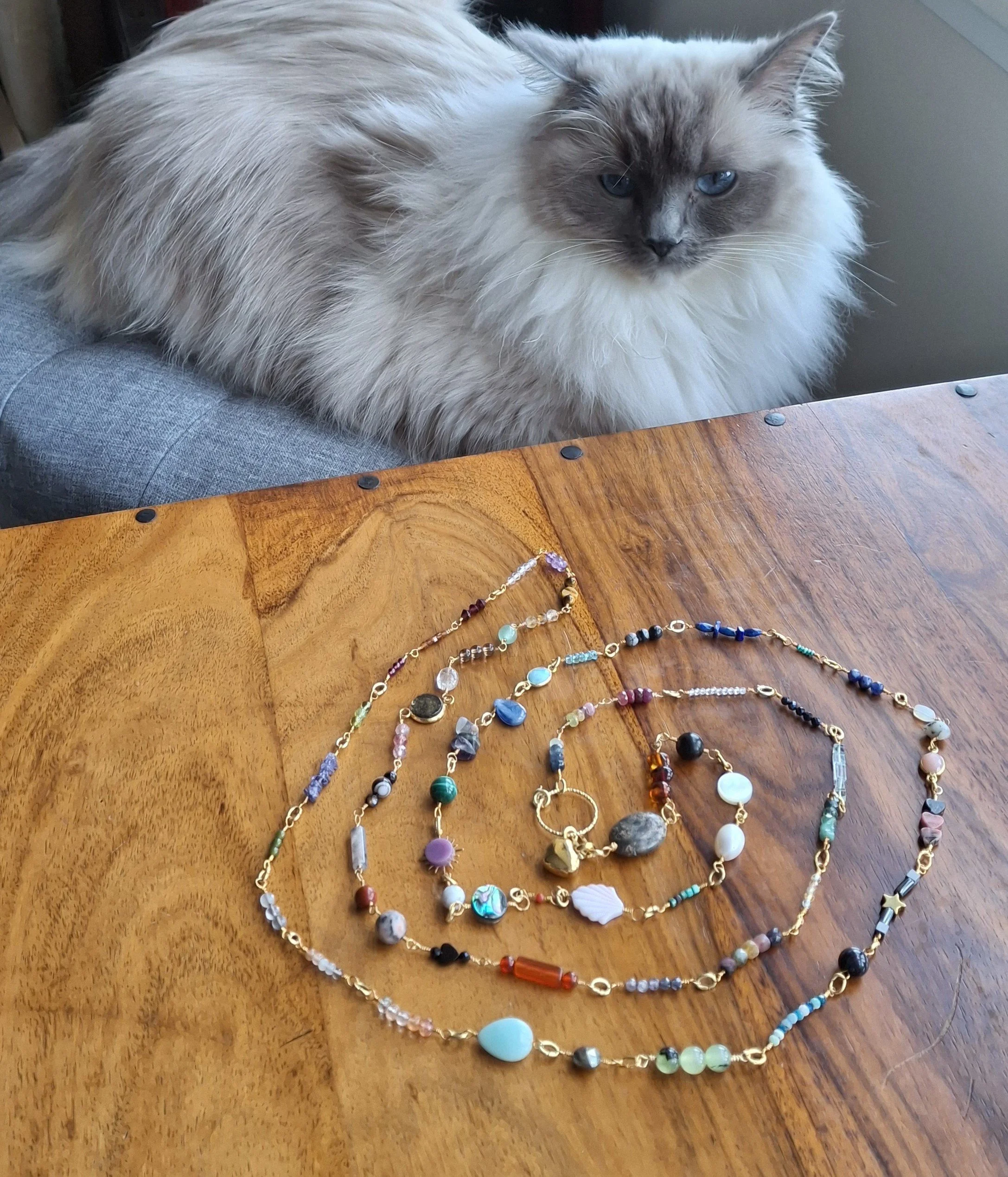
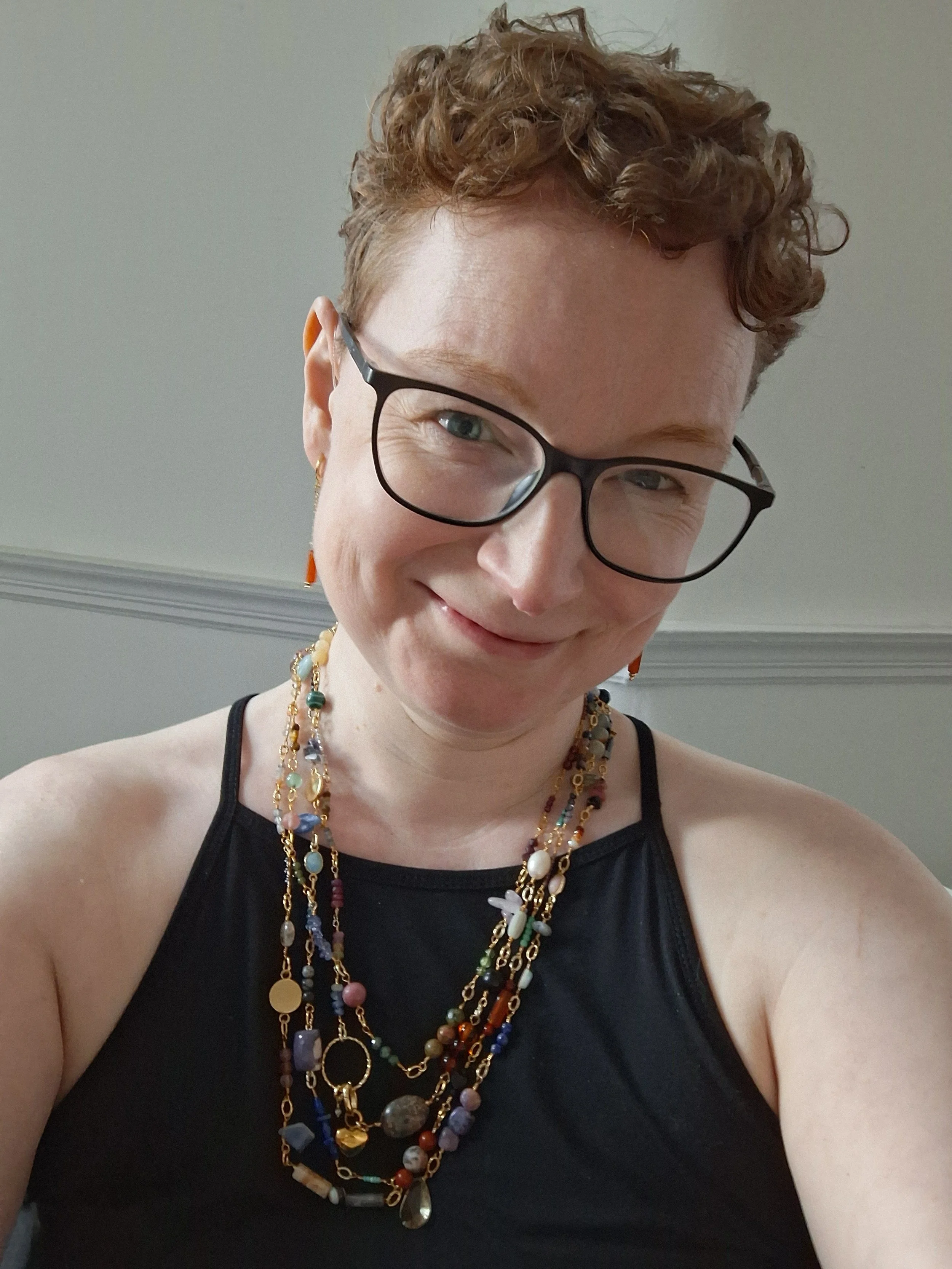
The necklace is currently just over 8 feet long (2.4 metres) and weighs 74 grams (2.6 ounces) so it is extremely unwieldy to wear - check out the gallery at the bottom of the page for a pic of me straining my neck, suffering for my art…
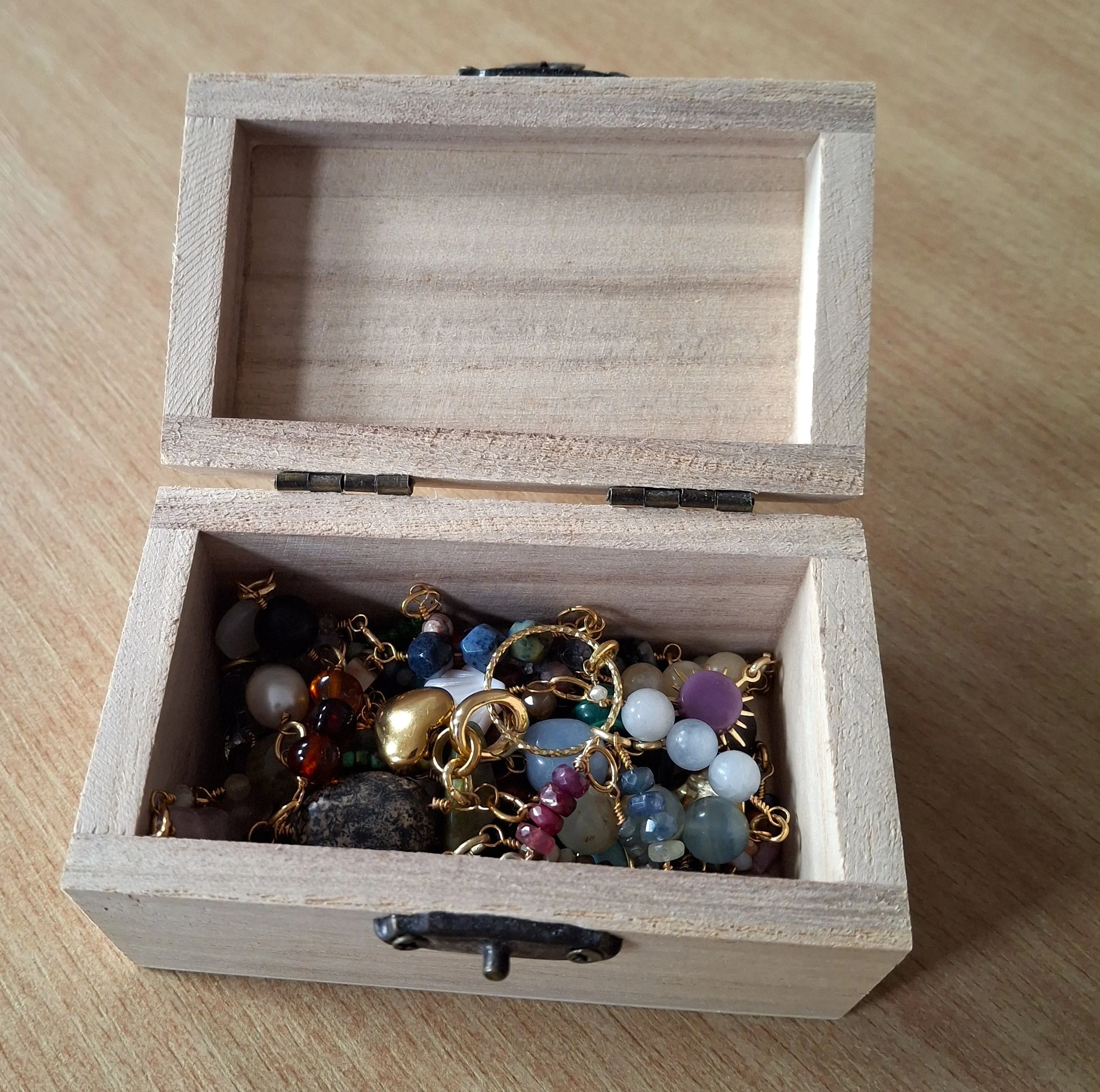
The first video is worth using sound for, the necklace makes a nice cronchy sound when I take it out its special wooden box and pop it on the table.
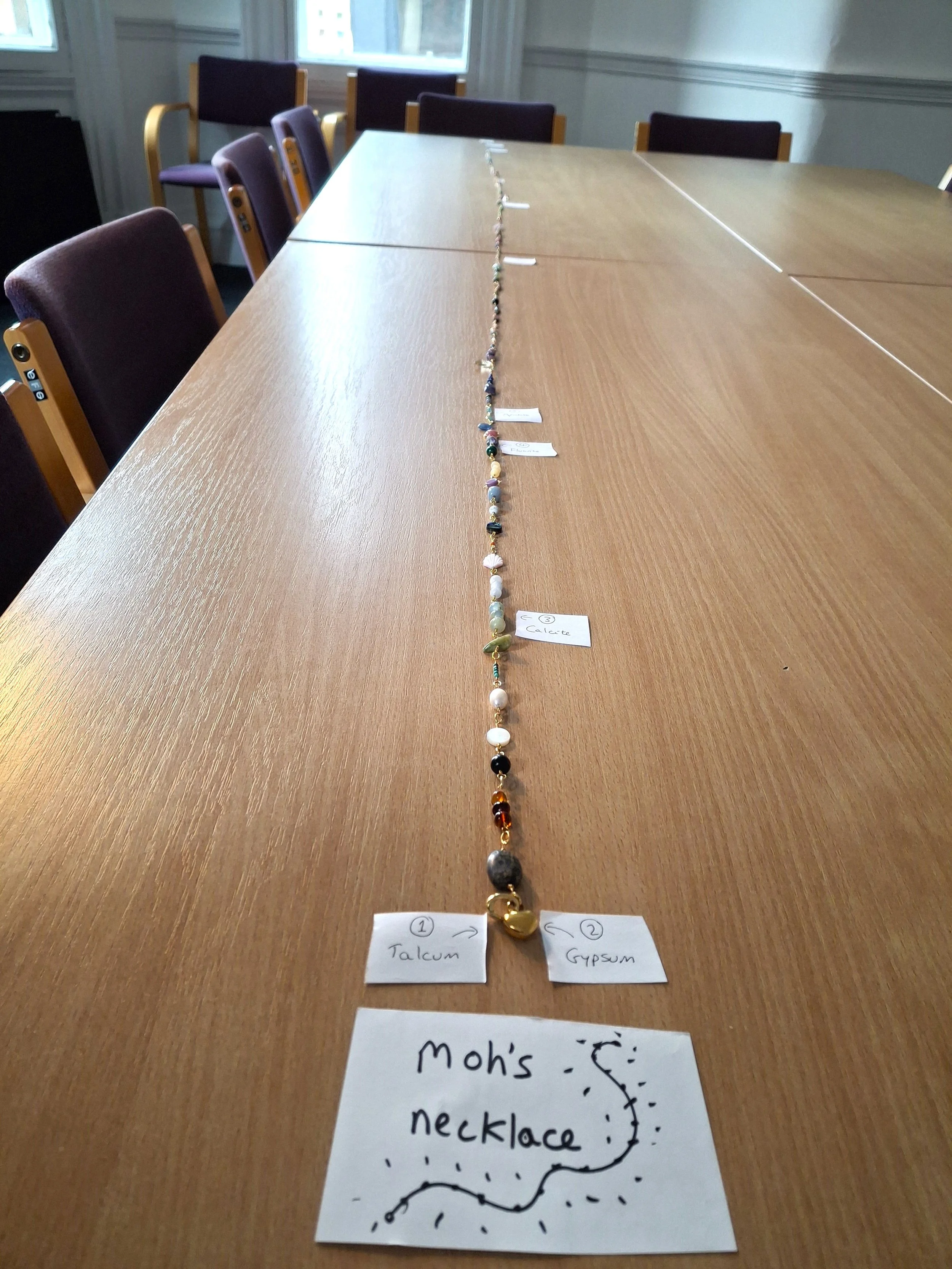
And if you click the second video you can have a tour along the scale from 1 to 10. I filmed this in the boardroom at my office, as there is nowhere in my flat long enough to lay it all out!
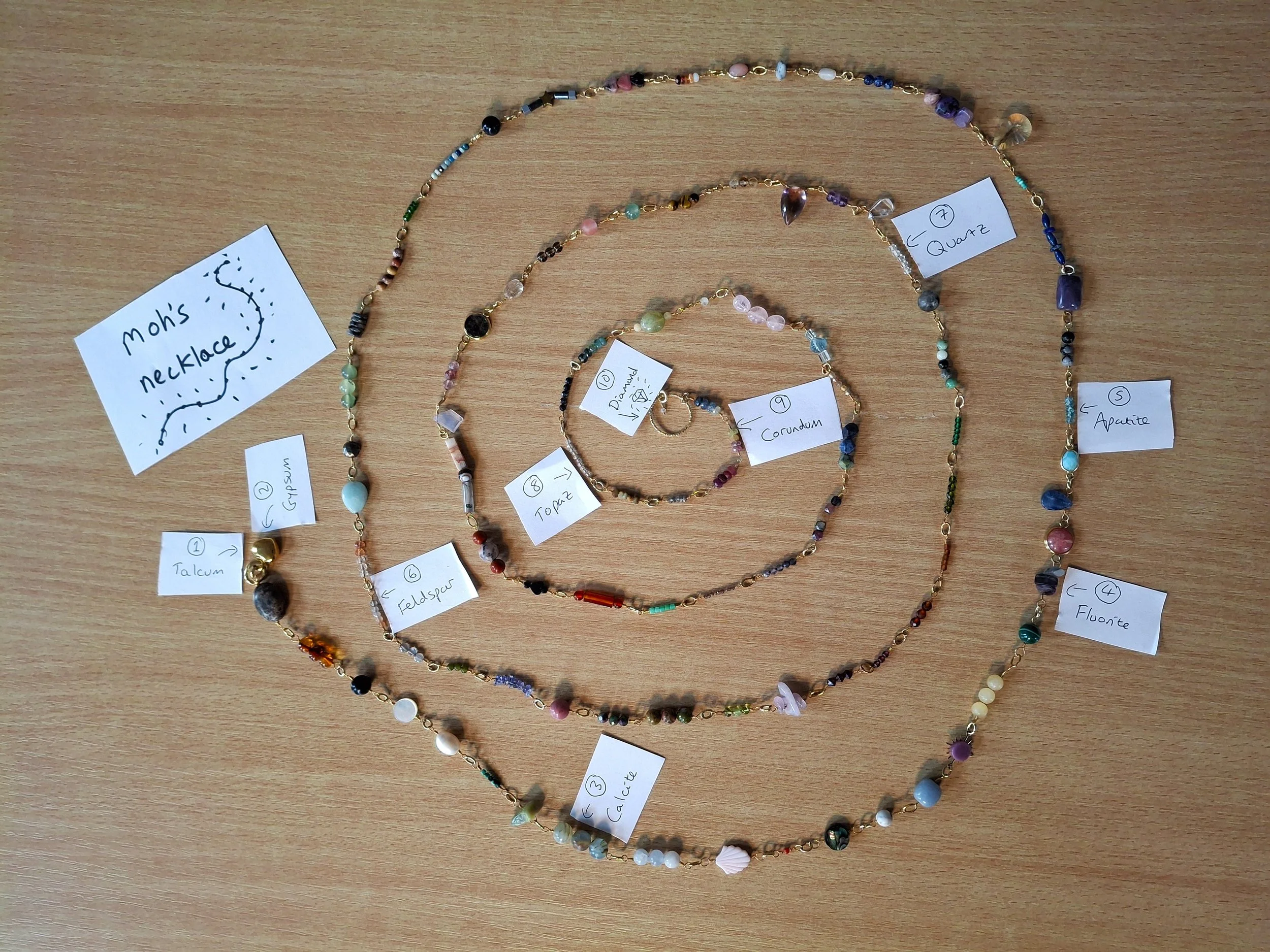
You can also download a PDF of the labelled necklace graphic if you want to print it as a little reference guide for your workshop :-)
Minerals, rocks and a golden heart
Adding talcum and gypsum
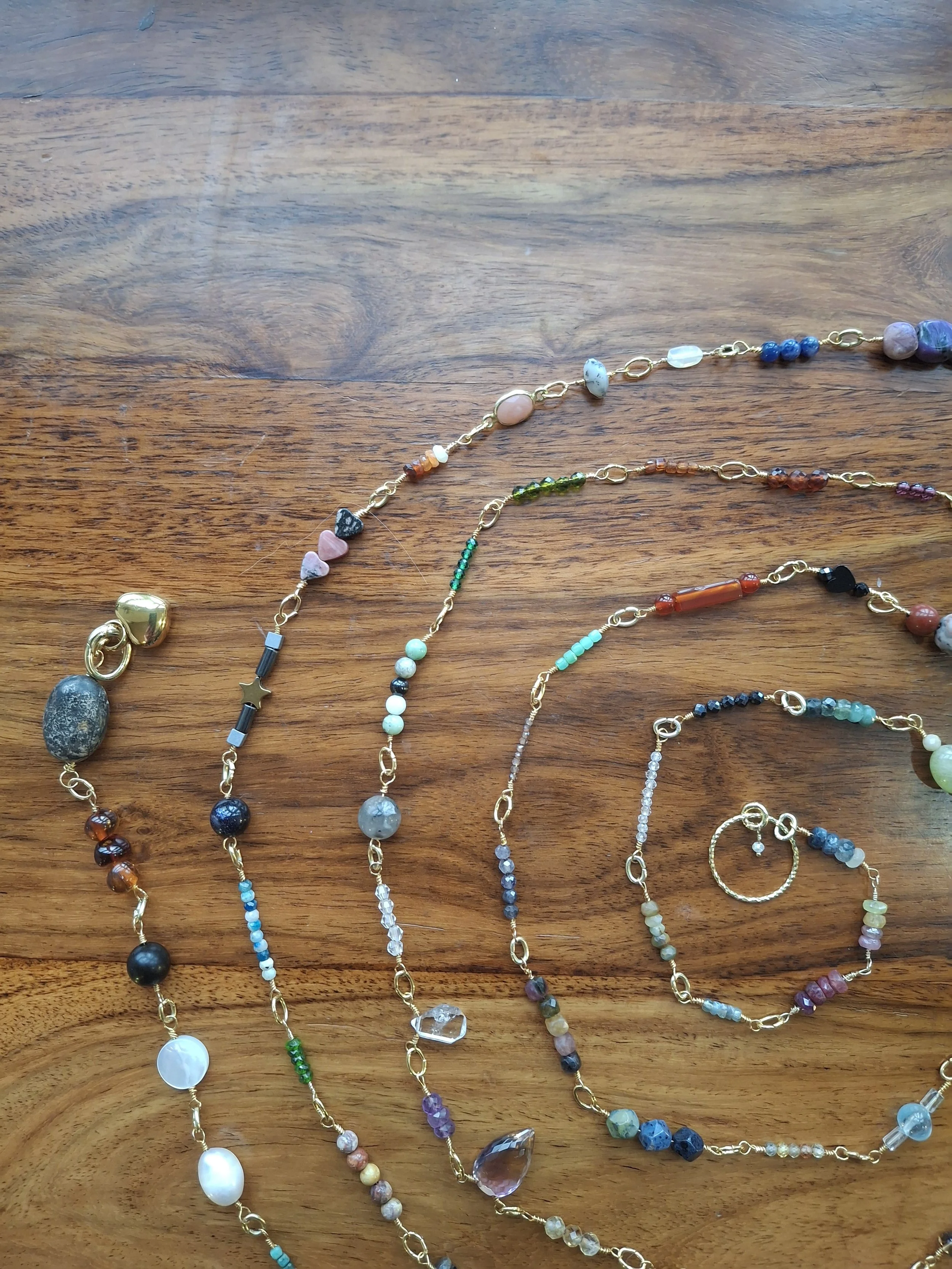
The necklace currently comprises 102 gems; well, 100 recognisable gems and two mineral powders. The Mohs scale starts with talcum at number 1 and gypsum at number two, which are both far too fragile to use as beads, so I included them inside a gold-plated heart locket normally used for cremation ashes.
The rest of the reference minerals on the scale is as follows: calcite at 3, fluorite at 4, apatite at 5, orthoclase feldspar at 6 (represented in the necklace by moonstone), quartz at 7, topaz at 8, corundum at 9 and diamond at 10 on the scale.
There are 34 different individual mineral species represented on the necklace currently, plus two mineral groups (garnet and tourmaline), as well as: six biological gems; one man-made glass gem (goldstone); six rock gems comprising three different types of rock (igneous, metamorphic and sedimentary); two mineraloids (snowflake obsidian and opal), one mineral aggregate (bloodstone) and one element (carbon in the form of a tiiiiny diamond).
Many minerals have different gem varieties which are known by different names, and notably quartz, beryl and the garnet group have a great many varieties.
Dazzling varieties of silicon dioxide
Quartzes, starting with rock crystal on the left and spiralling inward
The necklace includes 21 different varieties of quartz. Quartz is the mineral silicon dioxide and the huge number of gem varieties are classified into cryptocrystalline (crystals not visible with optical microscopic) and macrocrystalline (crystals visible to naked eye).
I've included the following varieties (and they are listed in the order they appear, spiralling inward in the picture): rock crystal, Herkimer 'diamond', amethyst, ametrine, citrine, tiger's eye, aventurine, rose, smoky, rutilated, tourmalinated and haematoid quartz (all macrocrystalline), and chalcedony, agate (banded, moss, lace), jasper (red, zebra), onyx, carnelian and chrysoprase (all cryptocrystalline).
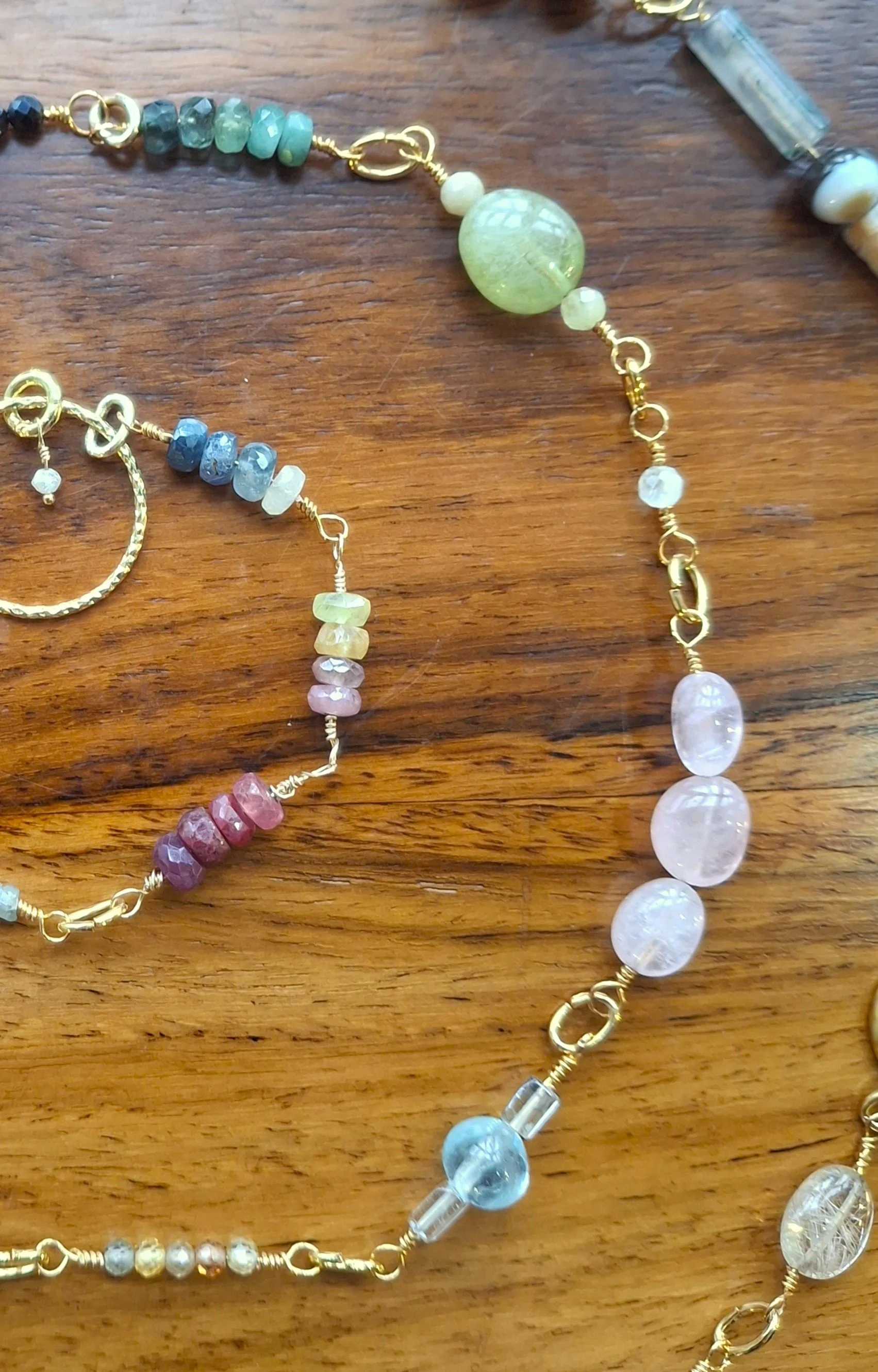
The beryls: Emerald, heliodor, goshenite, morganite and aquamarine
Beryl-liant beads
There are five varieties of beryl included: aquamarine, morganite, goshenite, heliodor/golden beryl and, the most verdant inclusion dans le jardin, emerald.
Beryl is the mineral beryllium aluminium silicate and it’s a trace of chromium (and sometimes vanadium) in the mix which gives the precious green colour to emeralds. Confusingly, heliodor/’golden’ beryl can also be green, but this colouring comes from Fe3+ ions (a form of iron) and it is usually yellowy and pale green rather than emerald’s rich deep hue.
It’s not hard to guess that the beryl variety known as aquamarine is blue with a hint of pale green, caused by iron in the crystal structure. Morganite is the pink variety, with the colour coming from manganese, and goshenite is the colourless variety. The name originates from Goshen, Massachusetts, where it was originally discovered, and in the past, goshenite has been used for manufacturing spectacles and lenses, owing to its transparency.
Seeds of silicate beauty
Garnets (top row, left to right): hydrogrossular, tsavorite, demantoid, hessonite, spessartine, rhodolite and almandine
Garnet is a group of nesosilicate minerals with a range of chemical compositions, and there are two main groups of garnets (aluminium silicates and calcium silicates/grossular), and several gem varieties within those.
Garnet is one of my all-time favourite gemstones; my engagement ring is a gorgeous square garnet and I had a ‘secret’ tiny garnet gem set into my wedding band to match.
I’ve included seven varieties of garnet in the necklace and it has been fascinating for me to see the beautiful variations:
Almandine is the most common garnet, with the classic deep red pomegranate seed colour, caused by iron.
Rhodolite has a violet-red shade and can be considered as essentially a mix of almandine and another type of garnet, pyrope.
Spessartine, also known as mandarin garnet, is yellow-orange to reddish orange, caused by manganese.
Hessonite, sometimes called ‘cinnamon stone’ due to its gorgeous burnt orange-brown shade.
Demantoid has a vibrant green colour, caused by chromium. Originally found in Russia, this variety is notably sparkly and is highly refractive, like a diamond.
Tsavorite is named after the Tsavo national park in Kenya, and is fairly rare and expensive, coloured light to intense green mainly by vanadium.
Hydrogrossular garnet forms masses of interlocking, microscopic crystals which makes it a tough material. Translucent to opaque, and found in green to bluish pale green, pink, white, and gray, it is sometimes called ‘Transvaal jade’ or ‘African jade’.
The corundum condundrum
Corundum ranging from deep blue sapphire to near-purple ruby
One of the sparkliest (and most expensive!) additions to the necklace are the two big corundums; ruby and sapphire. An interesting fact about corundum: it is a crystalline form of aluminium oxide, which can contain traces of iron, titanium, vanadium, and chromium, giving it a range of colours.
We use the term 'sapphire' to refer to all colours of corundum apart from red ones, which are termed 'ruby'. Sapphire alone tends to refer to blue varieties, with colours added to denote the others (yellow sapphire, pink sapphire etc), and where the line is drawn between a pink sapphire and a ruby is a pretty subjective decision!
Fun facts to know and tell
Anyway, if you are interested in finding out more, I can highly recommend a couple of books on the subject: Precious by Helen Molesworth which is a really engaging look at gems through history, and The Natural History Museum Book of Gemstones: A concise reference guide, which is where I get most of my fun facts and has some beautiful photos.
I'm planning to add to the necklace over time and would love any ideas you have, so please drop me a line if you have a shiny rock to suggest!